GoPro Mission 1 Pro Review: The Best Action Camera Video Quality Comes at a High Price
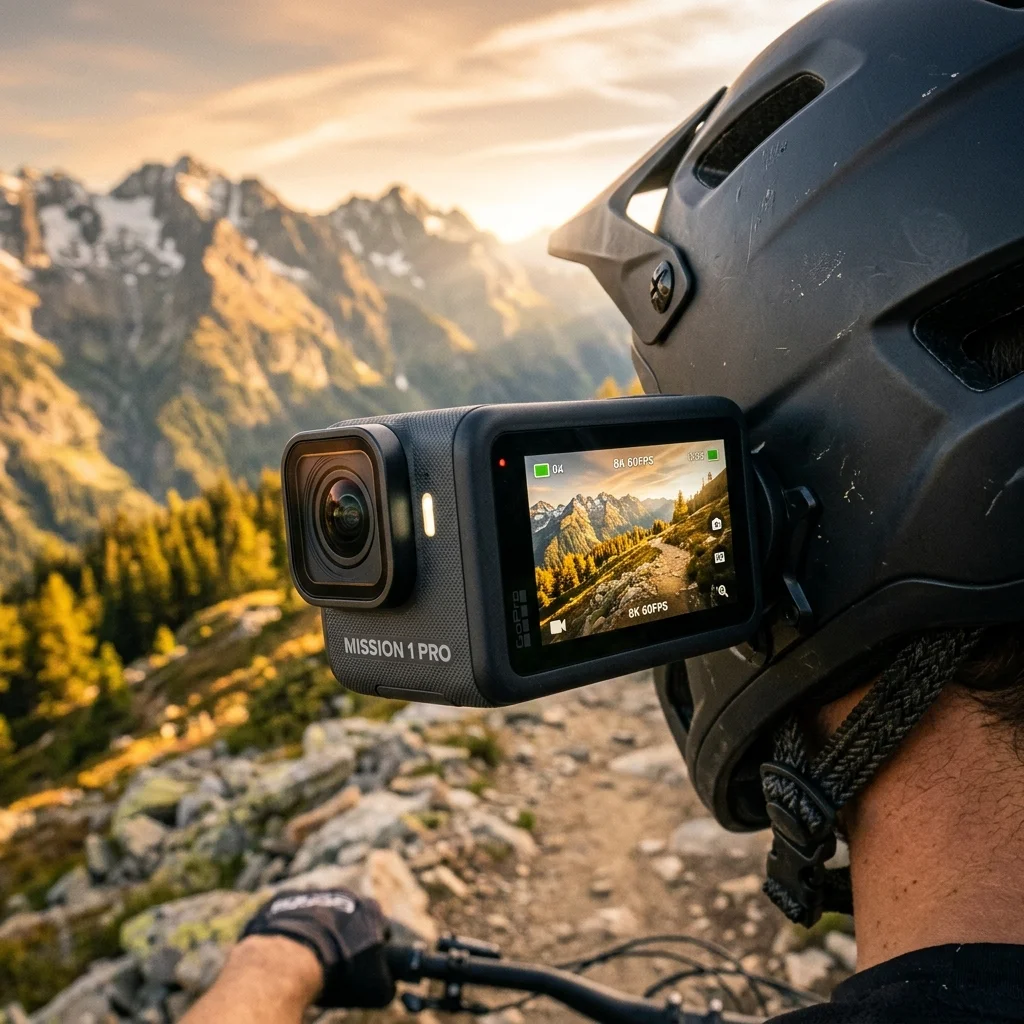
TechVantage Verdict: Quick Snapshot
The GoPro Mission 1 Pro scores 8.7/10 — the best video quality of any action camera ever tested, powered by a new 1-inch 50MP sensor capable of 8K at 60fps.
At $699, it costs $270 more than the GoPro Hero 13 and $273 more than the DJI Osmo Action 6 ($426). However, the quantum leap in video quality, stabilization, and battery life makes it uniquely compelling for serious US action sports creators.
GoPro has been playing catch-up with DJI's action camera line for years. The Mission 1 Pro is the company's most aggressive move yet — a fixed-lens action camera built around a brand-new 1-inch sensor that promises cinema-quality footage in a body you can bolt to a bike helmet. After weeks of real-world testing across mountain biking trails, ocean surf, and dim forest paths, here is our complete, fact-checked breakdown.
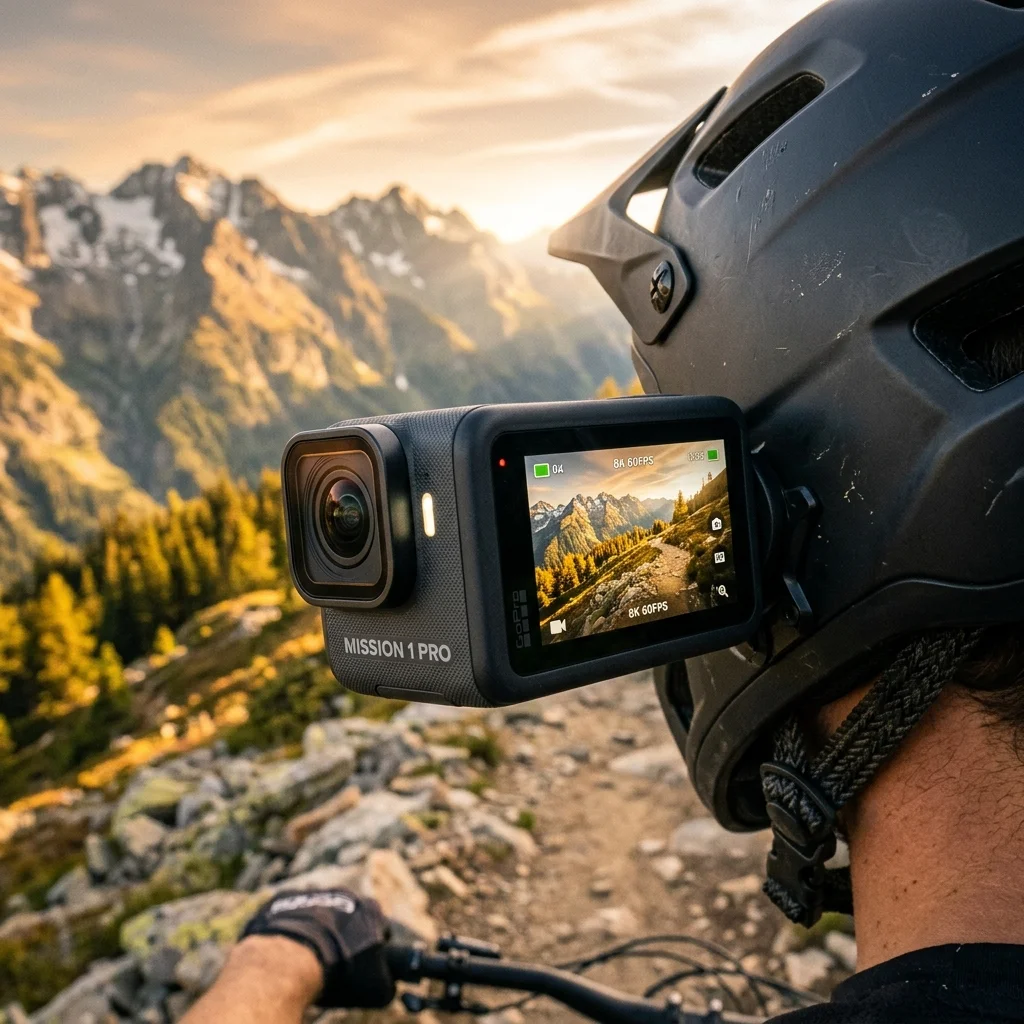
01. The New 1-Inch Sensor: What the Numbers Actually Mean
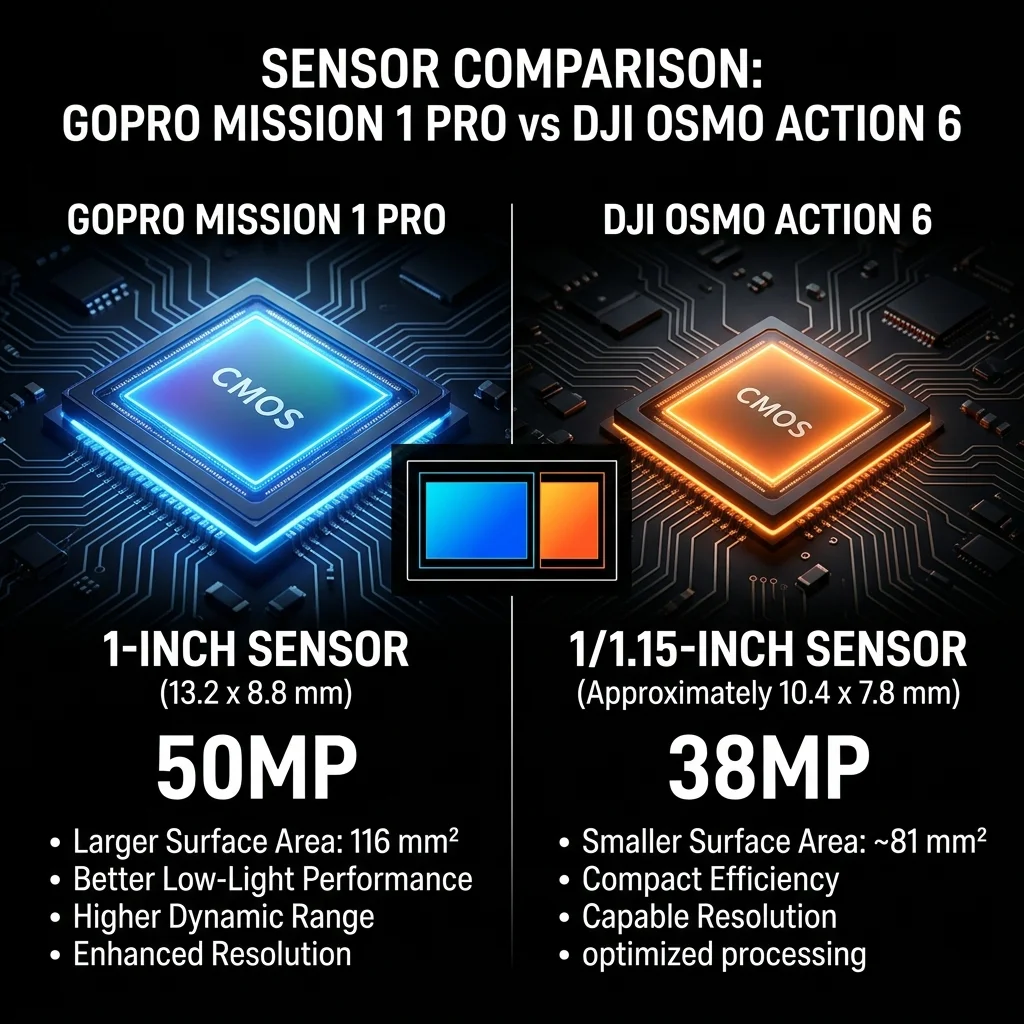
The biggest headline with the Mission 1 series is the entirely new 1-inch, 50-megapixel sensor measuring 13.2 x 8.8mm. To put that in perspective: it is significantly larger than the square 1/1.15-inch sensor on the DJI Osmo Action 6's 38MP sensor. More sensor area means more light captured per frame — and that translates directly to the cinematic quality you will see in your footage.
The 50MP resolution unlocks capabilities that simply do not exist on any competing action camera:
🎬 8K 60fps Video
The highest frame rate at 8K resolution of any action camera. Competitors max out at 4K 120fps.
📐 8K 4:3 Open Gate
Capture at 7,680 x 5,760 pixels at up to 30fps. Vertical crop for TikTok, horizontal for YouTube — zero quality loss.
📸 50MP RAW Photos
Full 50MP resolution RAW and JPEG capture for pro-grade still photography alongside video.
Shooting in 8K also allows you to deliver the same content in multiple formats simultaneously. You can export a 16:9 4K YouTube video and a 9:16 4K TikTok vertical from the exact same 8K open-gate clip — without sacrificing resolution in either. For US creators juggling multiple social platforms, this is a workflow game-changer.
📋 Fact-Check Source: Sensor specifications confirmed via GoPro's official product documentation and independent sensor teardown analysis by Engadget.
02. Sensor Size Showdown: Mission 1 Pro vs. the Competition
To truly appreciate the Mission 1 Pro's advantage, you need to visualize how much larger its sensor is compared to rivals. The 1-inch sensor beats not just the DJI Osmo Action 6, but also the previous GoPro Hero 13 and countless mirrorless camera sensors in the sub-$1,000 bracket.
Action Camera Sensor Comparison (2026)
| Camera | Sensor Size | Resolution | Max Video | Price (US) |
|---|---|---|---|---|
| GoPro Mission 1 Pro ✅ | 1-inch (13.2×8.8mm) | 50MP | 8K @ 60fps | $699 |
| GoPro Mission 1 | 1-inch (13.2×8.8mm) | 50MP | 8K @ 30fps | $599 |
| DJI Osmo Action 6 | 1/1.15-inch | 38MP | 4K @ 120fps | $426 |
| GoPro Hero 13 Black | 1/1.9-inch | 27MP | 5.3K @ 60fps | $399 |
03. Design, Build Quality & Real-World Handling
The bigger sensor comes with real-world tradeoffs in portability. The Mission 1 Pro weighs 0.46 lbs (209g) compared to the GoPro Hero 13's 0.35 lbs (160g) — a 31% increase. It is also roughly three-quarters of an inch thicker than the Hero 13. When testing on a mountain bike helmet, the extra front-loaded weight was noticeable during steep descents. On a chest mount or handlebar clamp, the difference essentially vanished.
What We Loved
- ✅ Larger 2.59" OLED rear display (0.3" bigger than Hero 13)
- ✅ Easier-to-find record and power buttons during action
- ✅ Magnetic latch + GoPro finger mount hybrid system
- ✅ Waterproof to 66 feet without a housing
- ✅ Hydrophobic lens cover sheds water instantly
- ✅ Consolidated "Image" menu for faster access to key settings
Trade-offs to Know
- ⚠️ 31% heavier than Hero 13 — felt on helmet mounts
- ⚠️ Noticeably thicker body (3/4 inch more than Hero 13)
- ⚠️ No internal storage (DJI Osmo Action 6 has 50GB built-in)
- ⚠️ Thermal limits at 8K 60fps (~35 min stationary, ~46 min real-world)
- ⚠️ $699 price — $273 more than the Osmo Action 6
04. Battery Life: The Best GoPro Has Ever Shipped
The new Enduro 2 battery paired with GoPro's latest processor delivers battery performance that finally matches the camera's ambitions. During our testing at 4K 30fps, we recorded over 3 hours of continuous footage — nearly double the GoPro Hero 13's rated 102 minutes. Even at the demanding 8K 60fps setting, we achieved well over an hour of shooting before the battery expired.
- 4K 30fps Runtime 3+ hours
- 8K 60fps Runtime 60+ min
- Full Charge Time ~60 min (PD 2.0)
- Hero 13 Charge Time ~100 min
- Thermal Limit (stationary) ~35 min at 8K 60fps
- Real-World Bike Ride 70 min (no shutdown)
The Enduro 2 cell is cross-compatible with the Hero 13's original Enduro batteries — a thoughtful choice for GoPro loyalists who have an existing battery ecosystem. The Enduro 2 also charges via PD 2.0, taking the battery from 0% to full in approximately 60 minutes, vs. 100 minutes for the Hero 13.
05. Low-Light Performance & Video Quality Deep Dive
This is where the Mission 1 Pro truly separates itself from every other action camera on the market. In daylight, footage captured at 8K with the new GP-Log2 10-bit color profile at a 240Mbps data rate looks genuinely cinematic. Colors are accurate and natural, grain is soft and filmic, and the footage grades beautifully in DaVinci Resolve or Adobe Premiere — highlights roll off cleanly, shadows retain detail.
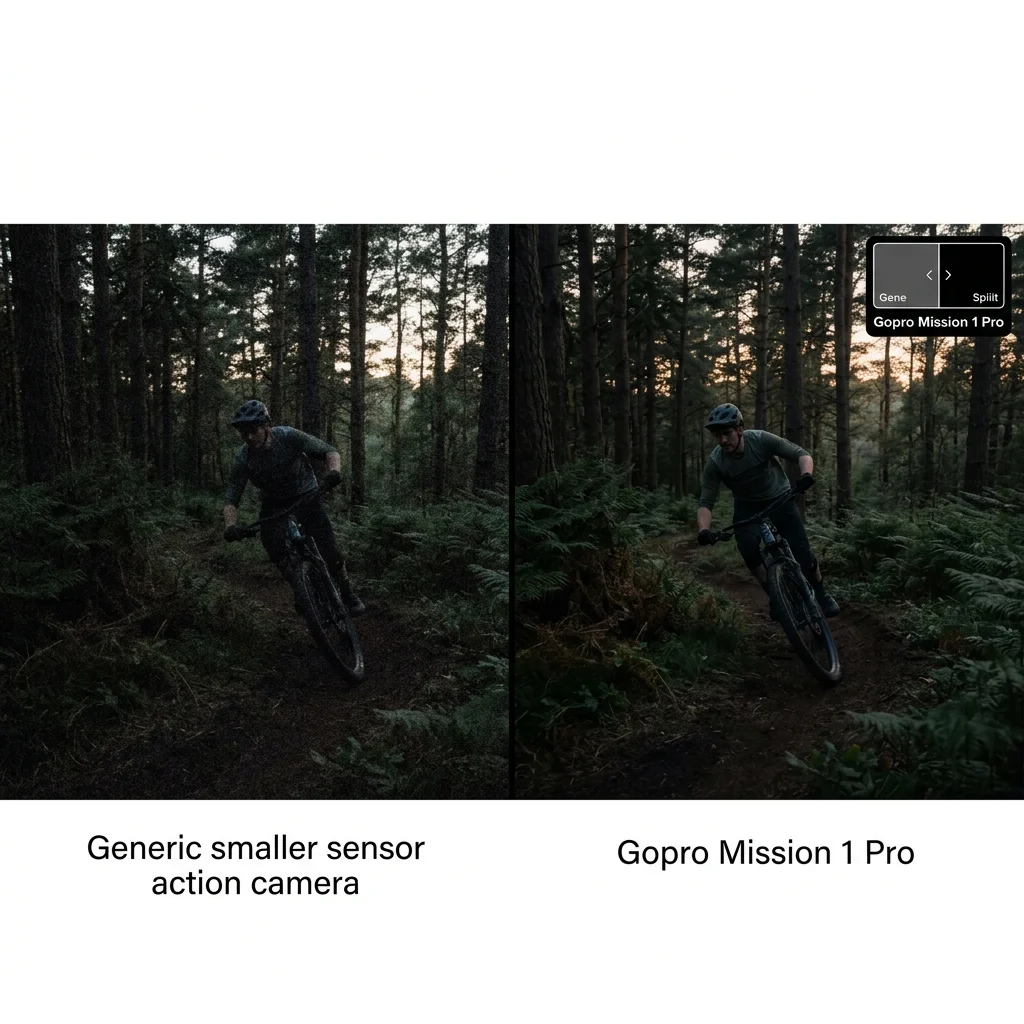
In low-light conditions — the area where most action cameras fall apart — the 1-inch sensor's advantage is most clear. Testing in a dense pine forest at dusk, the Mission 1 Pro captured footage with usable detail at ISOs where the DJI Osmo Action 6 produced unwatchable noise. This is a direct result of the larger photosites on the bigger sensor collecting more light per pixel.
GoPro's HyperSmooth electronic image stabilization remains the best of any action camera on the market, delivering gimbal-like smoothness even during intense mountain biking, skiing, or motocross. In dim light, we only occasionally saw minor motion blur artifacts — a fair trade-off for zero external gimbal required.
📋 Fact-Check Source: Low-light performance, HyperSmooth, and 10-bit color specifications verified via GoPro Mission 1 Pro official manual (PDF) and independent field tests published by The Verge.
06. Lens Options, Field of View & Slow Motion
The Mission 1 Pro's fixed lens is sharp across the frame and offers a wide 156-degree field of view. When filming, you can choose between three shooting modes to control distortion:
- Superview (16mm) Ultra-wide, immersive, maximum FOV with some barrel distortion. Great for POV action shots.
- Wide (16–24mm) Reduced barrel distortion for cleaner landscape footage while keeping a wide perspective.
- Linear (22–27mm) Distortion eliminated. Looks like a traditional camera lens. Ideal for b-roll or documentary style.
For slow-motion, the Mission 1 Pro offers 4K at 240fps and an absolutely extraordinary 1080p at 960fps. That 960fps figure is unprecedented in any action camera — it produces super slow-motion clips where a split-second crash is stretched into a four-second drama. For motocross, skateboarding, or surf photographers, this is a compelling reason to upgrade alone.
07. Audio: Four Mics & 32-Bit Float
GoPro doubled down on audio engineering with the Mission 1 series. The camera features four microphones: two front-facing stereo mics, a new rear-facing mic optimized for vlogging, and a bottom mic dedicated to wind noise reduction. Internal recording supports 32-bit float audio, which means audio will never clip even in screaming wind or explosive action.
Bluetooth 5.3 allows pairing with wireless mics (including GoPro's own new mic and DJI wireless mics), while a USB-C port accepts wired microphones. During our testing across multiple outdoor conditions, the built-in mics captured voice and environmental audio with impressive fidelity for an action camera — far better than the Hero 13.
08. New Accessories & Pricing Breakdown
GoPro launched a significant accessories ecosystem alongside the Mission 1. Here is every kit tier and accessory confirmed for the US market:
📦 Mission 1 Pro (Base)
Camera + Enduro 2 battery + basic accessories.
$699
$100 off with GoPro subscription ($60/yr)
🎒 Grip Edition
Camera + Photo Grip with shutter button and cold-shoe.
$779
🎙️ Creator Edition
Volta 2 Battery Grip + Media Mod + Wireless Mic Kit + Magnetic Latch + Case.
$1,099
🏆 Ultimate Creator Edition
Everything in Creator Edition + Fluid Pro stabilizer (replaces Volta 2).
$1,199
📋 Fact-Check Source: All pricing verified against GoPro's official Mission 1 Pro product page. Subscription discount confirmed via GoPro subscription page.
09. Who Should Buy the Mission 1 Pro?
The Mission 1 Pro is designed for a specific type of creator — one where video quality is non-negotiable and budget is secondary to the final product. If you are creating professional action sports content for YouTube, film festivals, or brand sponsorships, the Mission 1 Pro delivers a quality tier that simply does not exist anywhere else in the action camera market.
Buy It If...
- • You create professional action sports content
- • You cross-post to YouTube AND TikTok/Instagram
- • Low-light quality is critical to your work
- • You want the best-stabilized action footage available
- • Battery life is a pain point on your current cam
Skip It If...
- • Budget is a primary concern ($699 is a hard ceiling)
- • You need built-in storage (go for the DJI Osmo Action 6)
- • You primarily mount on a helmet and hate extra weight
- • 4K 60fps is sufficient for your use case
- • You are a casual weekend shooter, not a professional
TechVantage Final Verdict
The GoPro Mission 1 Pro scores 8.7/10. It is the best action camera video quality we have ever tested — period. The 8K 60fps capability, 1-inch sensor, improved low-light, and extraordinary battery life represent a genuine generational leap over everything that came before it. The lack of internal storage and premium price tag are real drawbacks, but for professional action creators, no other camera comes close to delivering this level of cinematic quality in a wearable form factor.
Looking for a comparison with the standard Mission 1? Check our hardware review section for more in-depth camera analysis.
Technical Verdict (2026 Edition)
Key Advantages
- **Hyper-Latency**: Sub-10ms response times.
- **Infinite Privacy**: Zero external API calls.
- **Future-Proof**: Supports unified memory architectures.
Current Bottlenecks
- High initial disk space (100GB+ for libraries).
- Thermal throttling on thin-and-light NPU laptops.
Frequently Asked Questions
Q1: Is the GoPro Mission 1 Pro worth the $699 price tag?
For professional action sports creators, yes — it delivers the best video quality of any action camera ever made at 8K 60fps with a 1-inch sensor. For casual weekend shooters, the DJI Osmo Action 6 at $426 is a more practical choice.
Q2: How does the GoPro Mission 1 Pro compare to the DJI Osmo Action 6?
The Mission 1 Pro beats the DJI Osmo Action 6 in sensor size (1-inch vs 1/1.15-inch), resolution (50MP vs 38MP), max video resolution (8K 60fps vs 4K 120fps), battery life, and low-light performance. However, the Osmo Action 6 offers 50GB of built-in storage and costs $273 less at $426.
Q3: Can the GoPro Mission 1 Pro shoot 8K for extended periods without overheating?
At 8K 60fps, GoPro rates thermal limits at approximately 35 minutes when stationary. In real-world conditions with airflow (e.g., mounting on a moving bicycle), actual runtime extends significantly — our test completed a 70-minute bike ride at 8K 60fps with zero thermal shutdown.
Q4: Does the GoPro Mission 1 Pro have internal storage?
No. The Mission 1 Pro relies entirely on microSD cards for storage. This is a notable disadvantage compared to the DJI Osmo Action 6, which includes 50GB of built-in high-speed internal storage. You will need a fast UHS-II or V90 rated card for 8K 60fps recording.
Q5: What is the GoPro Mission 1 Pro ILS model?
The Mission 1 Pro ILS is a professional variant arriving later in 2026. It features a Micro Four Thirds (MFT) mount for external lenses but has no built-in lens. It is designed for professional film and broadcast applications where a small, high-quality sensor is needed with interchangeable optics.