US Presses UK and Allies to Secure Quantum Computing Supply Chains
"The field has moved from early-stage research to commercialization—now we must secure its foundation." — Ethan Klein, US CTO.
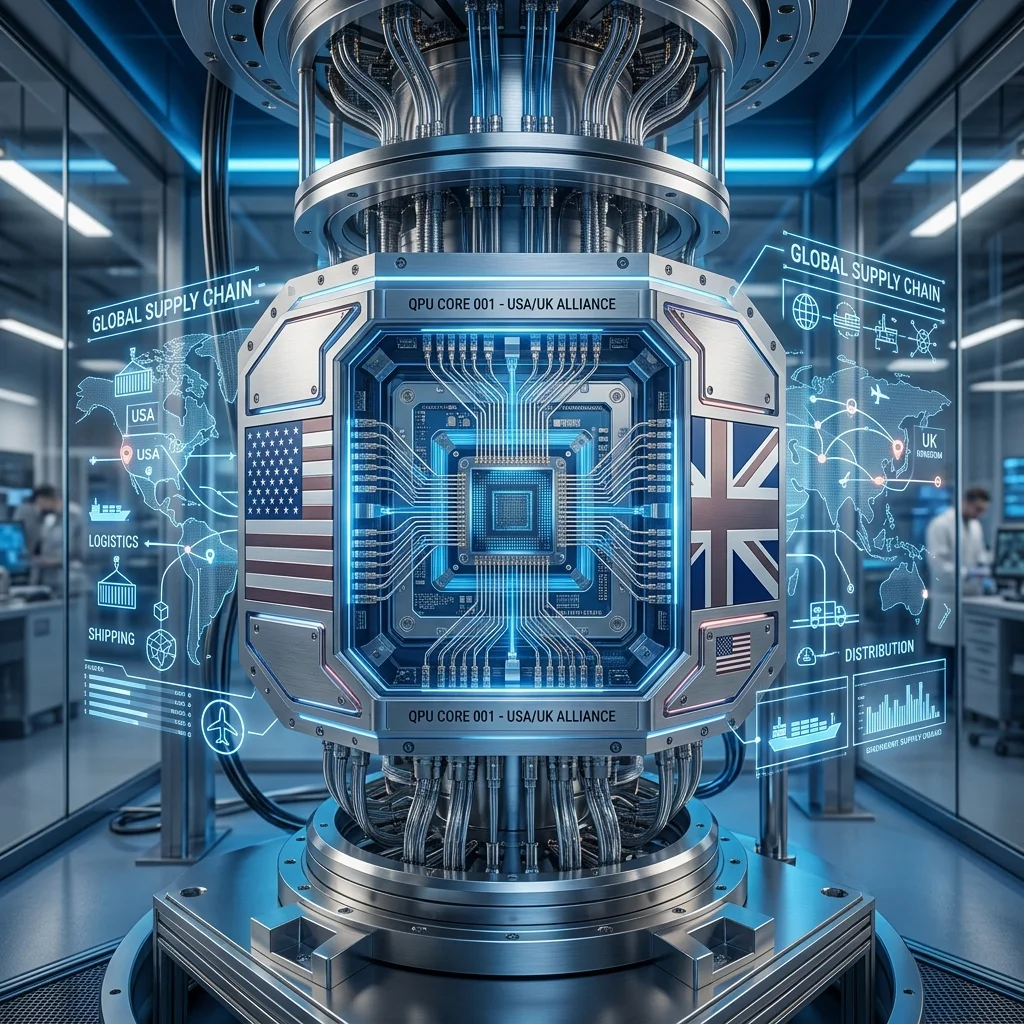
In a move that signals the end of "quantum theory" and the beginning of "quantum industry," the Trump administration has ramped up pressure on the UK and European allies to shore up the critical infrastructure supporting next-generation computation. At the center of this push is Ethan Klein, the US Chief Technology Officer, who is co-leading a high-level delegation to the Quantum Development Group meeting in London this week.
The Nodes of Vulnerability: Semiconductors and Rare Earths
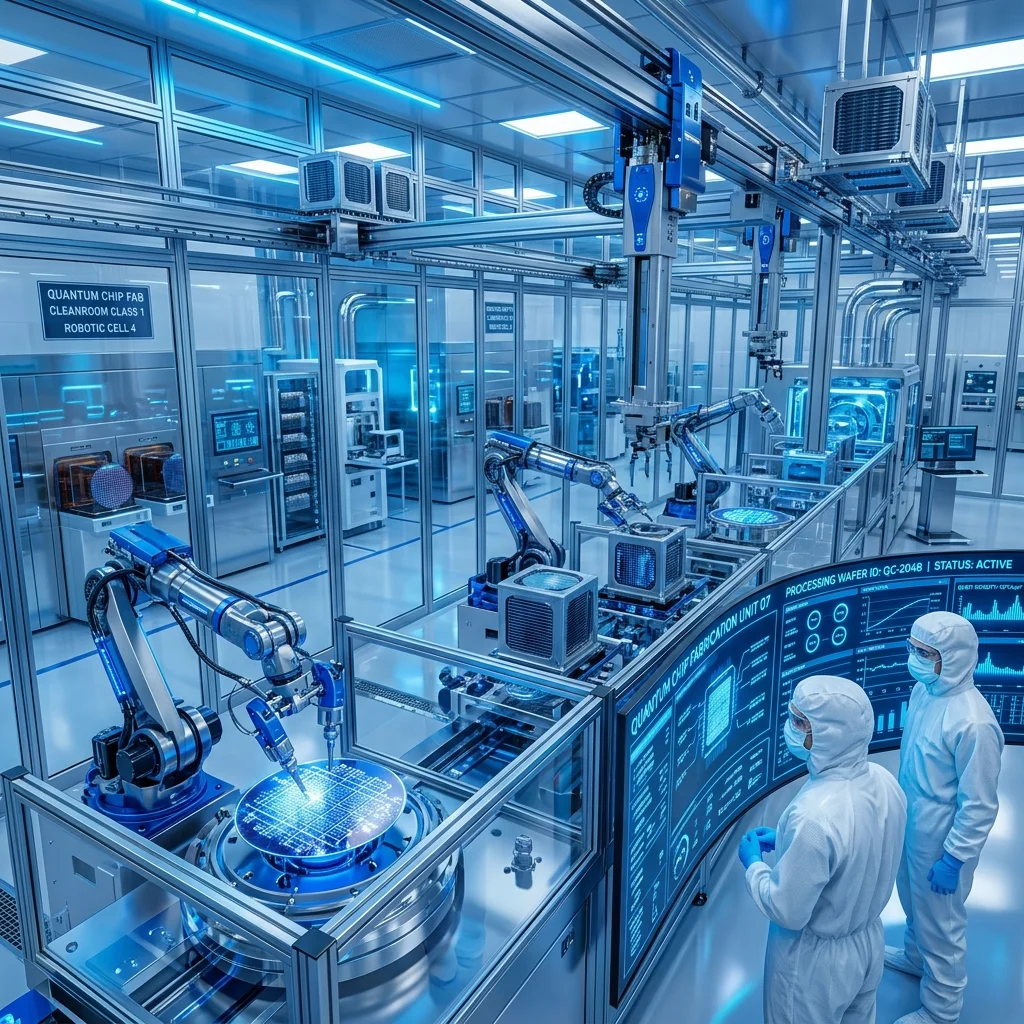
The US delegation's primary objective is to address what Klein calls the "critical nodes" of the quantum supply chain. These include specialized semiconductor manufacturing processes and the sourcing of rare earth metals—materials that are currently central to the fabrication of stable qubits.
"There are critical nodes of a quantum supply chain that do come from Europe," Klein told the Financial Times. "We want to ensure that we’re adequately supporting the sector through aligning policies and greater harmonization."
Latest Facts & Data Check (April 2026)
- The £11bn Investment: UK Chancellor Rachel Reeves has committed over £1bn toward purchasing a new generation of quantum computers to keep UK talent from moving overseas.
- Market Consolidation: In a landmark June 2025 deal, US-based IonQ acquired UK's Oxford Ionics for $1.1bn, merging trapped-ion technology with electronic qubit control.
- D-Wave's Practical Threshold: California's D-Wave recently crossed the "critical threshold" for practical optimization, marking the first time quantum annealing has outperformed classical solvers on specific industrial logistics problems.
The Tech Prosperity Deal Stand-off
This renewed cooperation comes after a period of tension. Last year, the US suspended implementation of the US-UK Technology Prosperity Deal. Reports suggest the friction wasn't technical but tactical, with US officials frustrated over "non-tariff barriers" like food and industrial regulations.
However, the rapid maturation of the industry has forced both nations back to the table. As quantum computing moves toward commercialization, the risk of supply chain disruptions in East Asia or reliance on adversarial nations has become a national security priority.
Strategic Recommendations for 2026
For tech leaders and investors, the message is clear: Quantum sovereignty is the new frontier. Companies are encouraged to:
- Diversify fabrication partners across US and UK territories.
- Invest in "NPU-Quantum Hybrid" systems (similar to the NPU optimizations seen in local LLMs).
- Monitor the Agentic AI evolution as it increasingly utilizes quantum backends for complex reasoning.
Frequently Asked Questions
Is quantum computing now useful for businesses?↓
Yes, companies like D-Wave have demonstrated practical utility in logistics and material science. Specifically, the "Quantum Annealing" method is already being used for complex route optimization that classical computers struggle with.
What is the US-UK Tech Prosperity Deal?↓
Initially announced in 2024, it aims to foster cooperation in AI, nuclear energy, and quantum computing. While it faced delays due to trade disagreements, the 2026 supply chain focus is revitalizing the partnership.
Why are semiconductors critical for quantum?↓
Modern quantum processors often rely on silicon-based fabrication techniques (like those used in the latest iPhone A-series chips) to scale qubit counts reliably.