The Post-Quantum Countdown: How Google is Safeguarding Cryptocurrency
Google’s latest whitepaper reveals that future quantum computers may break the elliptic curve cryptography protecting the digital economy with exponentially fewer resources than previously realized. Here is how they are responsibly disclosing the threat — and forcing a 2029 timeline for migration.

"With a 20-fold reduction in estimated physical qubits required to break ECDLP-256, the buffer for decentralized networks to migrate to post-quantum cryptography has rapidly vanished. The clock is officially ticking."
Google has led the responsible transition to post-quantum cryptography since 2016. In an industry-rocking whitepaper published alongside the Stanford Institute for Blockchain Research and the Ethereum Foundation, researchers have unveiled new insights into the capabilities of future quantum computers. Their conclusion? The cryptographic pillars holding up modern cryptocurrencies are far more vulnerable to mathematical breaking than previously established industry estimates.
Quantum Resource Estimates: Analyzing the Breakthrough
Quantum computers promise to solve impossible computational complexities across chemistry, material sciences, and drug discovery. However, large-scale cryptographically relevant quantum computers (CRQCs) will also possess the ability to run Shor's algorithm, systematically breaking the widely used public-key cryptography that safeguards personal data and blockchain ledgers.
The Google whitepaper shares aggressively updated estimates on the "resources" (qubits and logic gates) needed to break the 256-bit elliptic curve discrete logarithm problem (ECDLP-256). Blockchain architectures, specifically the secp256k1 curve favored by Bitcoin and Ethereum, rely almost entirely on the assumed intractability of this exact problem.
Google scientists compiled two optimized quantum circuits implementing the attack:
- Low-Qubit Variant: Requires fewer than 1,200 logical qubits and 90 million Toffoli gates.
- Low-Gate Variant: Requires fewer than 1,450 logical qubits and 70 million Toffoli gates.
Under conservative hardware assumptions — mirroring current advancements in superconducting qubit architectures — these circuits could be executed with fewer than 500,000 physical qubits in a matter of minutes. This marks an alarming 20-fold reduction in the volume of physical qubits once deemed strictly necessary to solve ECDLP-256.
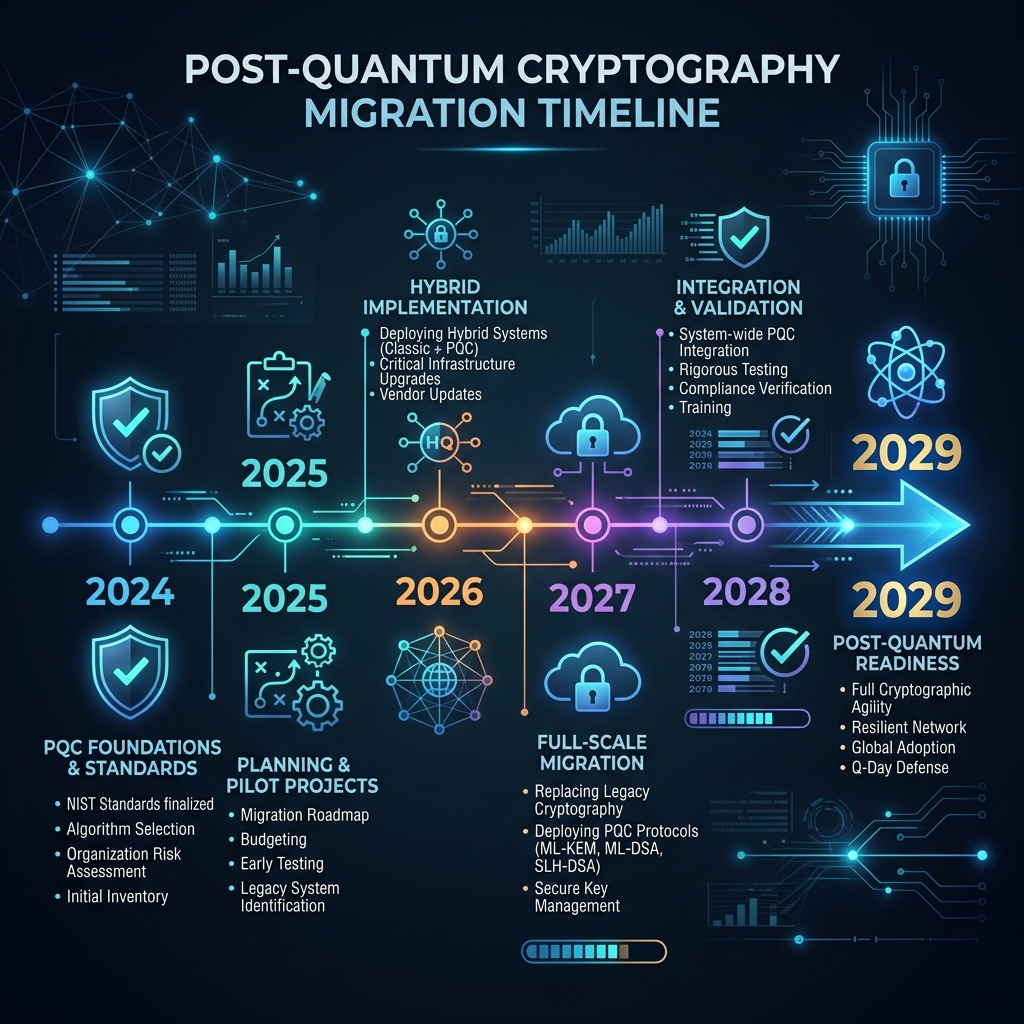
The 2029 Migration Mandate
In response directly to these findings, Google has officially stated their internal policy: migrate critical infrastructure by 2029. Most blockchain technologies remain severely exposed, bringing urgent reality to the "Harvest Now, Decrypt Later" threat vector.
Transitioning to Post-Quantum Cryptography (PQC) represents the most mathematically sound path to surviving the CRQC era. While experimental networks incorporating PQC signatures have shown promise, executing widespread forks across highly decentralized ecosystems is notoriously slow. Google warns against the mass reuse of vulnerable wallet addresses and emphasizes addressing policy models for "abandoned" cryptocoins which could represent trillions of dollars resting in mathematically fragile custody.
If you missed how hardware architectures are ramping up to support these workloads, make sure to read our review of US and UK collaborative quantum supply chain security initiatives.
Redefining Disclosure: The Zero-Knowledge Proof
In traditional InfoSec, releasing vulnerability data is a balancing act between "Full Disclosure" (which inadvertently hands bad actors a weapon) and "Responsible Disclosure" (giving targeted entities a quiet window to patch).
However, blockchains are unique. Their market valuation relies almost entirely on public consensus. Even wildly speculative, unscientific claims declaring cryptographic collapse can cause devastating "Fear, Uncertainty, and Doubt" (FUD), tanking network economies globally.
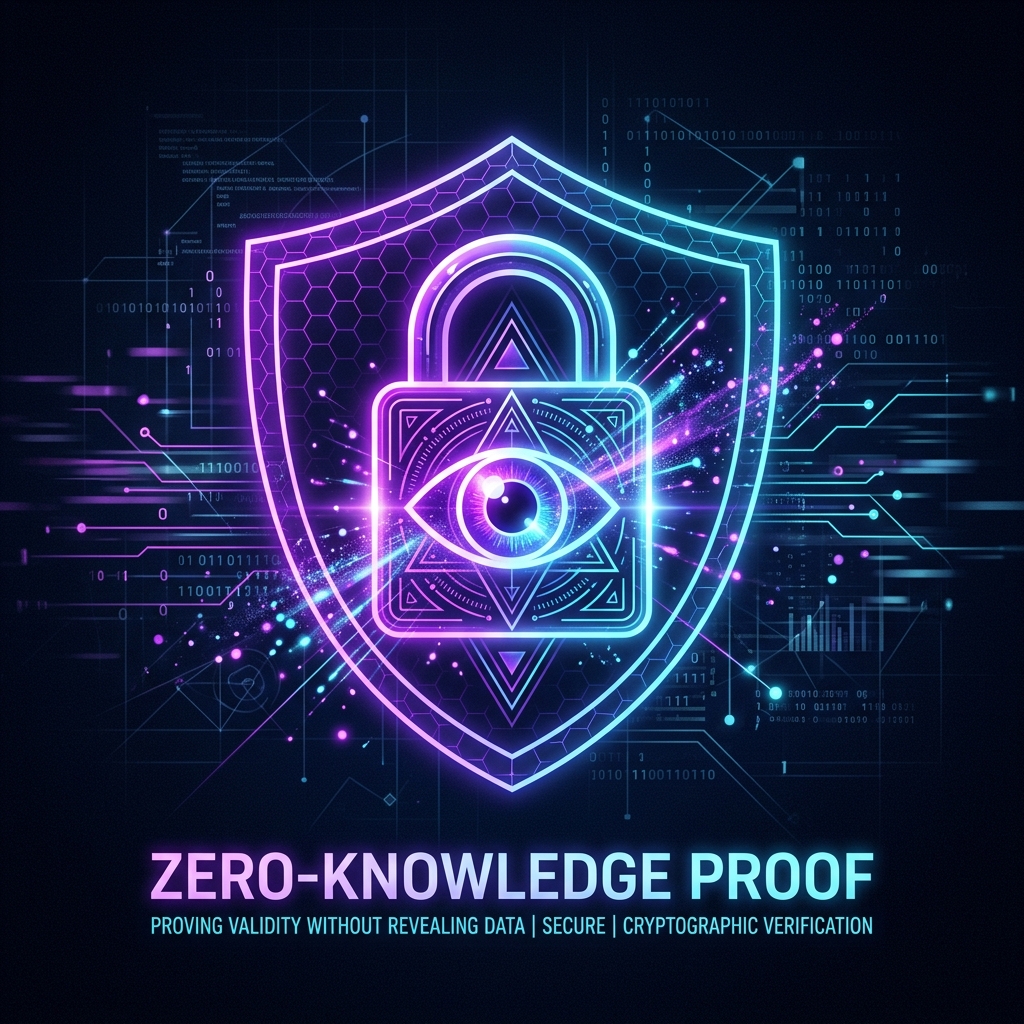
Google adopted a groundbreaking approach to this problem: they proved they can break the encryption without revealing how to do it. Utilizing a cryptographic mechanism called a Zero-Knowledge Proof (ZKP), Google’s researchers were able to mathematically verify to the entire academic world that their 500,000-qubit circuit model is accurate.
They validated the existence of the kill-switch without publishing the blueprints. By refusing to leak sensitive attack architectures while confirming the math definitively, Google hopes to establish a new gold standard for quantum cryptanalysis disclosure.
Looking Forward
The race against an operational CRQC is no longer theoretical. By pushing the conversation in collaboration with the Ethereum Foundation and others, Google is demanding that Web3 networks mature their baseline security models. The digital economy expects to be safe; by 2029, the industry must ensure that it actually is.
FAQ: Quantum Computing & Crypto Security
01.Are cryptocurrencies currently at risk from quantum computers?
No. The research from Google Quantum AI emphasizes that no cryptographically relevant quantum computer (CRQC) currently exists with the capacity to break 256-bit elliptic curve cryptography. This whitepaper is a resource estimation of future capabilities, not a prediction of an imminent attack.
02.What is the new resource requirement discovered for breaking ECDLP-256?
The groundbreaking finding is an approximately 20-fold reduction in required quantum resources. Implementing Shor's algorithm for ECDLP-256 now requires fewer than 500,000 physical qubits — using optimized circuits with under 1,450 logical qubits and less than 90 million Toffoli gates. This dramatically narrows the timeline for required post-quantum cryptography (PQC) migration.
03.What is Google's timeline for migrating to post-quantum cryptography?
Following these advances in quantum algorithms, Google has accelerated its internal timeline, targeting 2029 for a full transition of its systems to post-quantum cryptography (PQC). Furthermore, they urge the blockchain and cryptocurrency ecosystems to adopt similar timelines.
04.Why did Google use a 'zero-knowledge proof' for this disclosure?
To adhere to responsible disclosure policies without weaponizing the discovery. Publishing the exact quantum circuit could provide bad actors with a roadmap to attack systems ('Full Disclosure'). By using a zero-knowledge proof, Google allows researchers to cryptographically verify their resource claims without leaking the underlying circuit details.
05.What is Post-Quantum Cryptography (PQC)?
Post-Quantum Cryptography refers to modern cryptographic algorithms (such as lattice-based cryptography) that are mathematically resilient against attacks from both classical and large-scale quantum computers. Transitioning platforms like Ethereum and Bitcoin to PQC is crucial to maintaining long-term blockchain integrity.