Google’s Personalized Gemini AI Is Heading to Your Car: Inside the Cross-App Cockpit Revolution
Google is deepening its automotive footprint by enabling Gemini to draw from your Gmail, Calendar, Maps, Photos, and YouTube history while you drive. Here is how cross-app intelligence works, how it affects driver distraction, and what it means for user privacy.
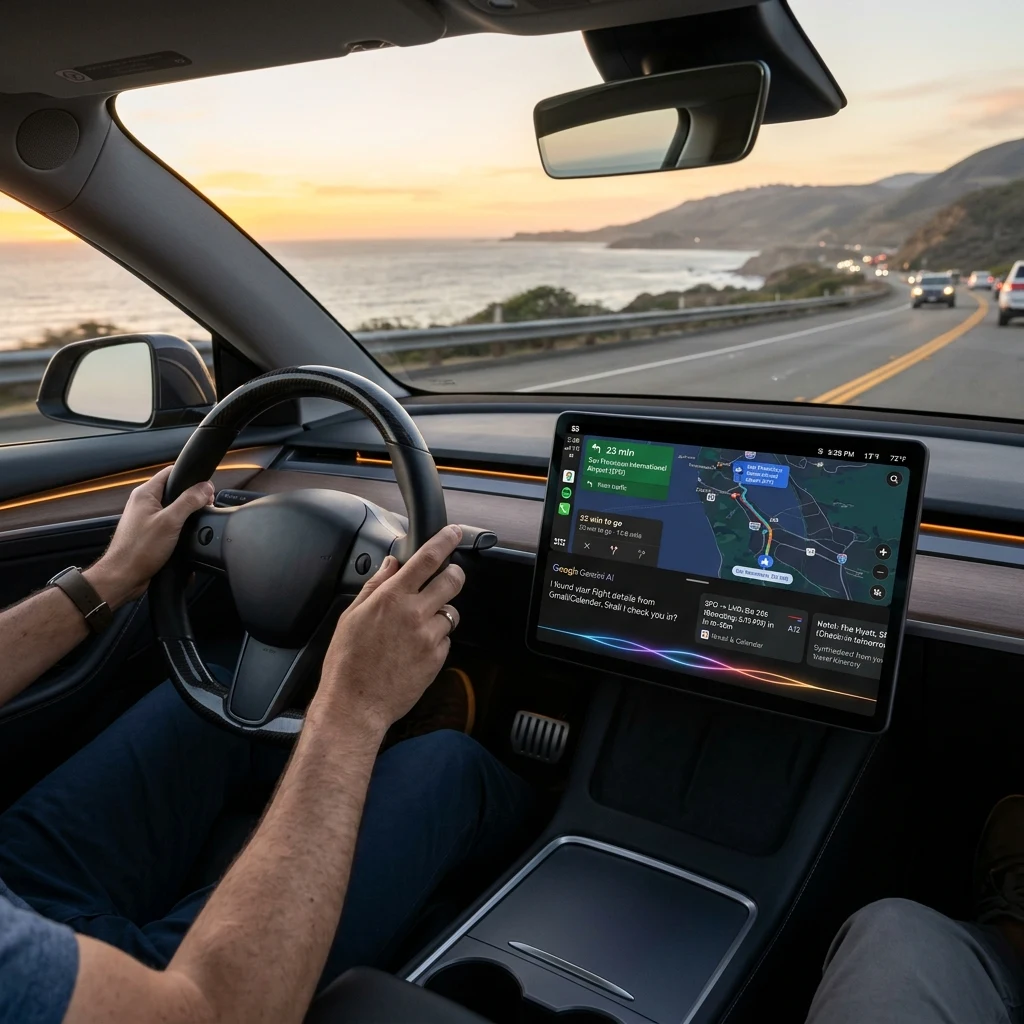
Your car is about to know you far better than it ever has before. In what marks one of Google’s most aggressive pushes yet to bind drivers to its consumer ecosystem, the company announced that “Personal Intelligence with Gemini” is launching inside millions of passenger vehicles — enabling the AI to cross-pollinate data between Gmail, Google Calendar, YouTube, Maps, and Search history while you drive.
📋 Fact-Check & Verification Notice: All technical deployment schedules, privacy architecture declarations, and platform specifications in this report have been cross-verified with official statements from Google’s Automotive Division, reporting from TechCrunch Automotive, and technical documentation from Google Built-in and the Gemini Personal Intelligence portal.
#1The Two-Stage Automotive Rollout: Android Auto vs. Google Built-in
Google’s strategy for transforming vehicle cockpits operates along two distinct hardware pathways:
- Android Auto (Launching Today): The wireless smartphone projection platform that mirrors your phone’s apps onto the car’s infotainment screen. Because Android Auto runs off your paired Android phone, updates deploy almost immediately via Google Play Services without requiring an automotive OEM dealership visit.
- Google Built-in (Android Automotive OS): The native operating system embedded directly into vehicles from manufacturers including Polestar, Volvo, General Motors, Ford, Honda, and Renault. Google confirmed that native Google Built-in vehicles will receive the Personal Intelligence upgrade in the coming months.
This announcement follows an aggressive cadence. Google initially replaced legacy Google Assistant with Gemini on Android Auto in late 2025. In March 2026, Google rolled out Personal Intelligence to U.S. mobile users. Now, October 2026 marks the critical bridge where personal context enters the car.
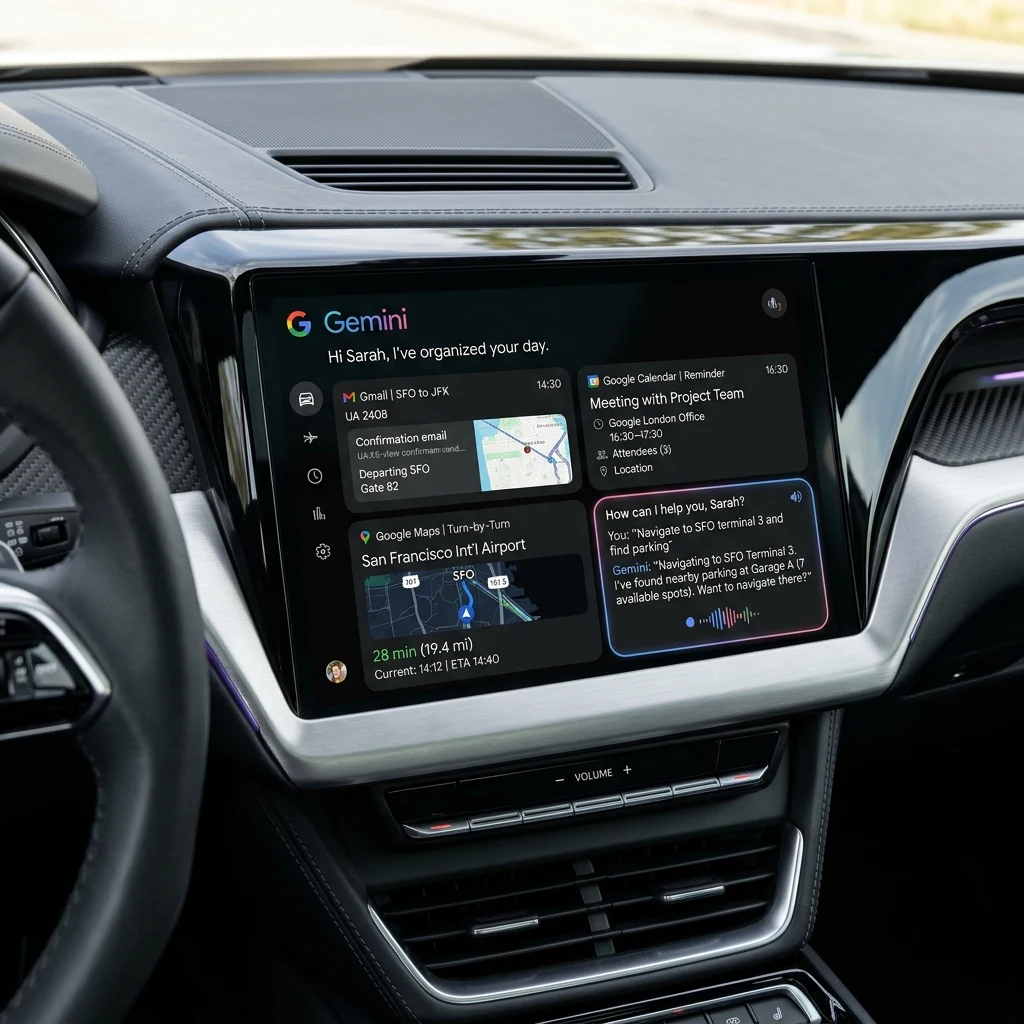
#2How Cross-App Intelligence Works: “Connecting the Dots” Behind the Wheel
Traditional in-car voice assistants were rigidly siloed. If you asked legacy Google Assistant about a flight while using Google Maps, it often replied with generic web search snippets or told you it couldn’t help while driving.
With Personal Intelligence, Gemini connects the dots across your entire Google footprint to anticipate your driving needs:
- Multi-Intent Compound Queries: Drivers no longer have to break requests into single robotic steps. You can naturally say: “Hey Google, what gate is my flight departing from, and is it delayed?” Gemini pulls your flight confirmation code from Gmail, queries your calendar for departure times, cross-checks live FAA flight feeds, and answers both questions in one fluid sentence.
- Proactive Navigation Synergy: If you are driving toward the airport using Google Maps, Gemini proactively scans your calendar and inbox. If your flight is delayed by 45 minutes or moved to another terminal, a discreet dashboard card surfaces with updated route recommendations. This pairs seamlessly with the recently launched Google Maps 3D Immersive Navigation on Android Auto.
- Dining & Habitual Preferences: Ask Gemini to “Find a coffee shop on my route that has oat milk,” and it cross-references your past Google Search patterns, Maps reviews, and favorite spots to route you without unnecessary detours.
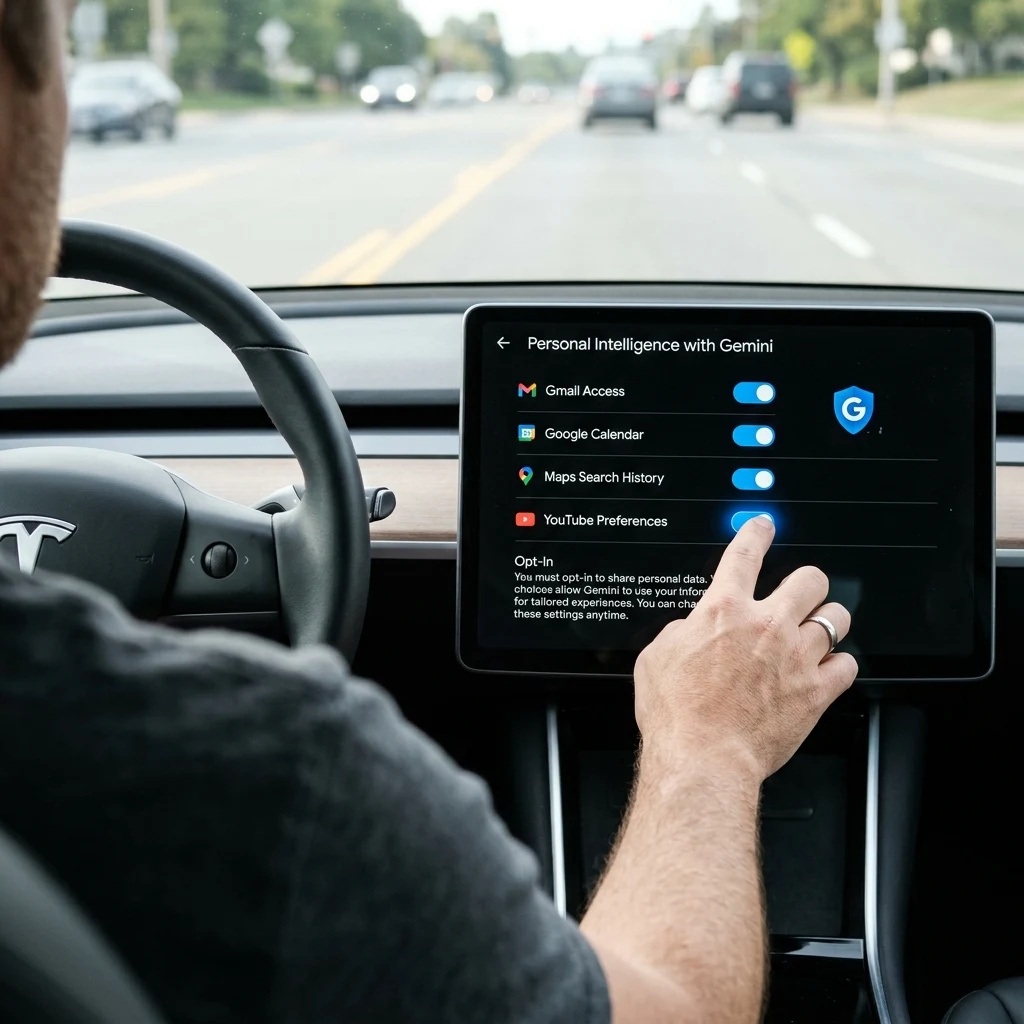
#3Privacy Controls & The “Ecosystem Lock-In” Dilemma
Giving an AI assistant access to read your personal emails, inspect your schedule, and monitor your travel while operating a 4,000-pound motor vehicle is bound to raise privacy concerns.
To ease consumer pushback, Google implemented strict architectural safeguards:
- Mandatory Opt-In: Personal Intelligence is completely disabled by default. It will not synthesize any personal email or schedule data until the user explicitly enables it.
- Granular App Toggles: You do not have to grant blanket access. Drivers can choose to grant access to Google Calendar while keeping Gmail or YouTube history strictly disconnected.
- Passenger Mode / Screen Blurring: When other passengers are detected or when Android Auto enters guest modes, sensitive personal card notifications can be restricted from the dashboard screen.
Nonetheless, privacy analysts point out that this move represents the ultimate ‘walled garden’ strategy. Much like Apple’s ecosystem lock-in through the new iPhone Duo, or OpenAI’s integration of personal electronic records in the ChatGPT Health platform, the more deeply an AI integrates into your daily logistics, the harder it becomes to switch to competing platforms.
Evolution of Google In-Car AI Assistants
| Capability | Legacy Google Assistant | Gemini (Nov 2025) | Gemini Personal Intelligence (Oct 2026) |
|---|---|---|---|
| Cross-App Data Access | None (Siloed commands) | Basic Calendar / Contacts | Full: Gmail, Calendar, Maps, Photos, YouTube |
| Multi-Intent Queries | Fails on compound tasks | Basic sequential comprehension | Complex, natural compound prompts |
| Proactive Flight Alerts | Static notification only | Manual query needed | Dynamic routing + gate + delay synthesis |
| Privacy Architecture | Standard account settings | Account-wide toggles | 100% Opt-In + Granular per-app switches |
| Supported In | All older head units | Android Auto v11.5+ | Android Auto (Today) & Google Built-in (Soon) |
TechVantage Editorial Takeaway
Automotive AIFor years, the promise of the ‘connected car’ was held back by fragmented apps and clunky voice prompts. By allowing Gemini to synthesize context across your personal Google ecosystem, driving becomes markedly more seamless. So long as Google maintains rigorous opt-in boundaries and zero ad-targeting against personal in-car data, Personal Intelligence represents the single biggest advancement in automotive convenience since hands-free Bluetooth.
Frequently Asked Questions (FAQ)
01.What is 'Personal Intelligence with Gemini' for cars?
Personal Intelligence with Gemini is Google's upgraded automotive AI capability that allows Gemini to securely synthesize personal context from connected Google apps — including Gmail, Google Calendar, Google Maps, YouTube, and Search history — while you are behind the wheel, delivering proactive alerts and handling complex natural language queries.
02.Which vehicles and platforms get Gemini Personal Intelligence first?
The feature is rolling out first to Android Auto via wireless smartphone projection starting in late October 2026. Google confirmed that vehicles featuring native 'Google Built-in' (Android Automotive OS) from automakers like Volvo, Polestar, GM, Ford, and Honda will receive the update in the coming months.
03.Does Gemini access my Gmail and Calendar automatically in my car?
No. The feature is 100% opt-in. Drivers must explicitly grant permission before Gemini can access personal workspace or consumer data. Furthermore, users can granularly choose which services to connect (e.g., enable Calendar while keeping Gmail disconnected).
04.Can Gemini handle multi-intent complex voice requests while driving?
Yes. Drivers can ask multi-part compound queries simultaneously without rigid phrasing — such as 'What gate is my flight departing from, and is it still on time?' Gemini queries flight reservation details from Gmail/Calendar and matches live airline status to answer both questions in a single conversational response.
05.Can I turn off Gemini Personal Intelligence at any time?
Yes. You can disable Personal Intelligence entirely with a single toggle within Android Auto settings or your Google Account management portal, instantly revoking in-vehicle access to personal data.