Apple Exec Says ‘Hold Us Accountable’ on iPhone Duo Crease: Inside the Nano-Texture & Torque Breakthrough
In a remarkably candid interview, Apple hardware engineering VP Tom Marieb laid down the gauntlet to critics: judge the iPhone Duo’s crease after months of use. Here is the deep engineering behind Apple's matte finish, luxury car door hinge mechanics, and Ceramic Shield 2.
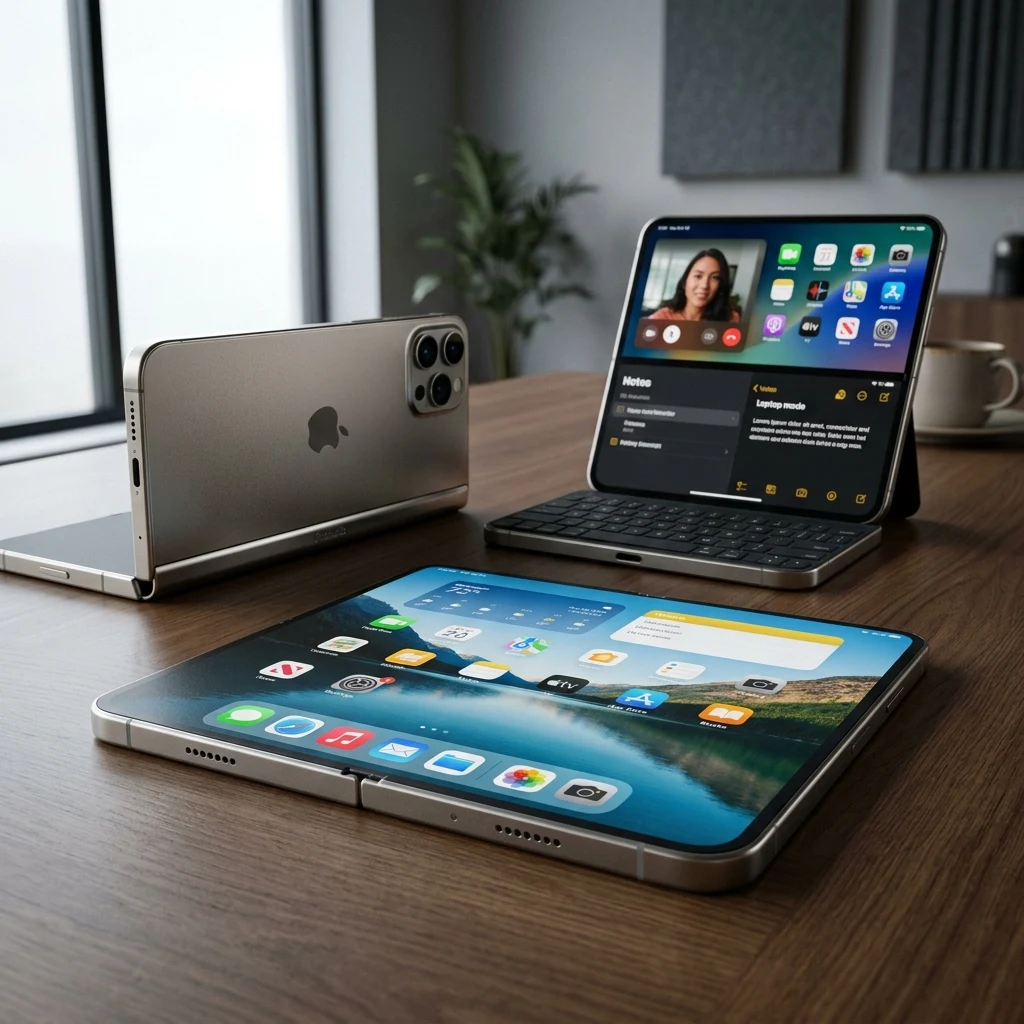
“Hold us accountable to that, please. The choice of a matte finish — apart from it being beautiful — is part of that equation. When you look at glossy displays, their specularity makes it very easy to pick up topology differences.”
📋 Fact-Check & Verification Note: All executive remarks, material science quotes, and technical specs cited in this article have been cross-verified with the original TechRadar interview conducted by Lance Ulanoff, industry supply-chain reporting from MacRumors, and official documentation from Apple Newsroom.
For six years, the foldable smartphone category has suffered from an inconvenient truth: the display crease. While Samsung, Google, and OnePlus have narrowed the groove with teardrop hinges, every folding glass screen on the market eventually develops visible micro-valleys when light catches the glossy reflection. With the imminent launch of the $1,999 iPhone Duo, Apple is taking a radically different engineering gamble.
#1The Optical Physics of Nano-Texture: Why Specularity Was the Real Enemy
When smartphone reviewers complain about the crease on foldable phones like the Samsung Galaxy Z Fold series, they aren’t just feeling it with their fingertips — they are seeing the specular reflection of overhead lights bend across the dip.
Glossy glass surfaces act like curved funhouse mirrors. When a flat mirror develops even a fraction-of-a-millimeter dip, reflected light distorts sharply, magnifying the topology difference straight into the user’s eyes.
By bringing its matte nano-texture glass etching technology (first perfected on Pro Display XDR and iPad Pro) to a flexible OLED substrate, Apple changes the physical behavior of light hitting the fold:
- Lambertian Light Diffusion: Instead of bouncing ambient light in a coherent glare beam, the nanometer-scale etched surface scatters photon reflections uniformly in all directions.
- Topological Camouflage: Because specular glare is eliminated, the microscopic depth variations created by the hinge trough become visually indiscernible to the naked eye during ordinary reading and video playback.
- Long-Term Aging Tolerance: As Marieb pointed out, even if the internal mechanical structure undergoes microscopic deflection after 200,000 fold cycles, the matte finish is inherently far more forgiving than ultra-glossy Ultra Thin Glass (UTG).
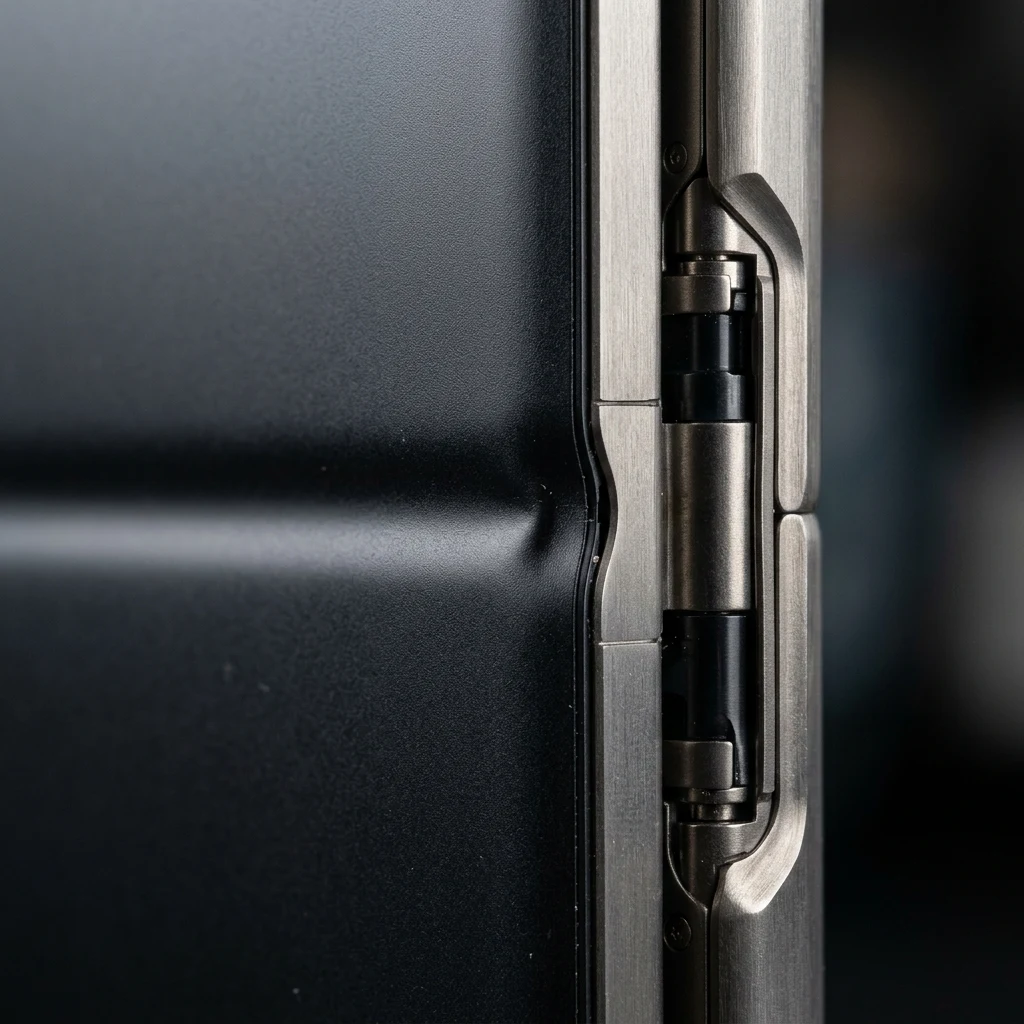
#2Automotive-Grade Torque: The ‘Car Door’ Hinge Feel
The second pillar of Marieb’s revelation concerns mechanical torque profiling. Early foldable phones often suffered from a binary hinge sensation — either feeling so stiff they resisted one-handed manipulation, or feeling sloppy and loose, causing the phone to snap shut unpredictably when propped on a table.
Marieb described the engineering mandate behind the iPhone Duo’s dual-cam torque assembly:
“We really worked on the torque profile very heavily, and that means changing a lot of the mechanical properties of the hinge to have it feel solid, like a high-end automobile's car door, when you shut it. That was design intent, so people would have a feeling like, 'Oh, it's okay. This is well crafted, and it's safe for me to use and not worry about it.'”
To achieve this, Apple engineered a multi-stage friction clutch using aerospace titanium and liquid metal alloys. The result is a hinge that supports seamless positioning across multiple operating modes:
- Flat Open Mode (180°): Locked rigid with zero wobble, presenting an expansive 7.9-inch internal workspace.
- Seated / Laptop Mode (90° to 120°): The bottom half rests stably on any surface, turning into a virtual keyboard or trackpad while the top half runs FaceTime or productivity apps.
- Standing Tent Mode: Stable for hands-free 4K video recording or tabletop media consumption without requiring a kickstand case.
- Audible Dampened Snap: When closing the phone, magnetic dampers decelerate the two halves at the final 5 degrees of travel, producing a refined, automotive-style ‘thud’ rather than a sharp plastic clack.

#3Ceramic Shield 2 & The Screen Protector Controversy
One of the most provocative moments in the TechRadar interview came when Marieb addressed aftermarket screen protectors:
“When I see someone put a screen protector on their iPhone, it makes my skin crawl.”
Why such passionate disdain from an Apple executive? According to Marieb, modern iPhone glass isn’t standard soda-lime or generic aluminosilicate. With the introduction of Ceramic Shield 2 on the iPhone Duo, Apple has grown nanoscale ceramic crystals inside the flexible glass matrix, delivering unprecedented drop toughness and scratch resilience out of the box.
Applying a cheap third-party glass or plastic film directly over the iPhone Duo’s nano-texture surface creates several critical problems:
- Destroys Optical Engineering: Layering glossy adhesive plastic over matte nano-etched glass negates the anti-reflective properties, immediately re-introducing the specular glare that hides the crease.
- Alters Hinge Clearance Tolerances: Foldable devices are calibrated down to hundredths of a millimeter. Extra glass thickness increases pressure at the hinge apex when folded flat, potentially accelerating mechanical fatigue.
- Degrades Haptic Sensitivity: Ceramic Shield 2 is tuned for low-friction touch interaction and precision Apple Pencil input. Screen protectors introduce drag and touch latency.
2026 Flagship Foldables: Crease & Hinge Architecture
| Feature | Apple iPhone Duo | Samsung Galaxy Z Fold 8 | Google Pixel Fold 3 |
|---|---|---|---|
| Screen Finish | Matte Nano-Texture | Glossy Anti-Reflective UTG | Glossy Standard UTG |
| Crease Visibility | Near-Zero (Diffused) | Visible under direct light | Noticeable reflection trough |
| Hinge Torque Profile | Automotive Car Door Firm | Dual-rail Flex Hinge | Fluid gearless friction |
| Cover Glass Material | Ceramic Shield 2 | Gorilla Glass Armor 2 | Gorilla Glass Victus 2 |
| US Launch Price | $1,999 | $1,899 | $1,799 |
#4Pricing, Pre-Orders, and the Klarna Leasing Strategy
The iPhone Duo opened for pre-orders on Friday, October 16, 2026, with the official worldwide retail launch slated for Friday, October 23, 2026.
At an entry price of $1,999, it represents Apple’s most expensive consumer iPhone ever. However, Apple is aggressively cushioning the upfront sticker shock through its newly minted financial programs.
As detailed in our recent deep dive on the Apple Upgrade partnership with Klarna, U.S. customers can lease flagship Apple hardware with zero down payment, soft credit checks, and flexible 12-to-24 month return-or-upgrade cycles. For users intimidated by a $2,000 upfront commitment, device leasing provides a low-risk gateway into Apple’s foldable ecosystem.
TechVantage Editorial Verdict
Category DefiningTom Marieb’s directive to ‘hold us accountable’ is rare bravado from an Apple executive team known for carefully hedged statements. By attacking the crease problem through optical physics (matte nano-texture diffusion) rather than simply flattening the hinge bend radius, Apple has bypassed the fundamental optical flaw of competing foldables. If long-term durability matches the initial engineering rigor, the iPhone Duo may finally turn the foldable smartphone from a niche curiosity into the next decade's dominant computing form factor.
Frequently Asked Questions (FAQ)
01.Why did Apple choose a matte nano-texture display for the iPhone Duo?
According to Apple VP of Hardware Engineering Tom Marieb, glossy screens have high specularity that accentuates surface topology differences (the crease). The matte nano-texture finish scatters light uniformly, eliminating reflections and hiding minor physical changes in the hinge trough over years of continuous folding.
02.What did Tom Marieb mean by saying 'Hold us accountable' regarding the crease?
Marieb explicitly invited consumers and reviewers to judge the iPhone Duo's crease longevity over months and years of real-world use, expressing full confidence that Apple's combination of internal torque physics, liquid metal hinge brackets, and matte nano-texture will keep the crease visually imperceptible over time.
03.How does the iPhone Duo's hinge feel compared to other foldables?
Apple engineered the hinge with a custom torque profile designed to feel like shutting a luxury automobile door. Instead of feeling loose or floppy, the resistance remains uniform and firm, allowing the device to prop itself up solidly in seated (laptop) mode or standing orientation without collapsing.
04.Why does Apple's hardware chief advise against screen protectors on the iPhone Duo?
Marieb noted that aftermarket plastic and glass screen protectors 'make my skin crawl' because they degrade touch responsiveness, introduce specular reflections, disrupt optical clarity, and add unnatural thickness that can damage the folding tolerance of the Ceramic Shield 2 display.
05.When is the iPhone Duo release date and how much does it cost in the US?
The iPhone Duo became available for pre-order on October 16, 2026, and officially launches in retail stores on Friday, October 23, 2026. U.S. pricing starts at $1,999 for the 256GB base model, with financing and leasing options starting through Apple Upgrade via Klarna.